The Living Coast
Nature-based climate adaptation for Copenhagen’s southern coastline
Project
The Living Coast – Nature-based climate adaptation for Copenhagen’s southern coastline
Client / Contracting authority
City of Copenhagen, Hvidovre Municipality, Tårnby Municipality and Dragør Municipality
Role
Subconsultant. Vision development, nature-based principles, visualisations.
Ingeniør
Other partners
Smith Innovation.
Status
Completed in 2021.
Outdoor area
Awards
Fund: Realdania
Length: 30 km
If a storm surge enters the Øresund from the south, it will affect the coastline, urban and residential areas, and infrastructure across municipal boundaries in the southern part of Greater Copenhagen. The City of Copenhagen, Hvidovre Municipality, Tårnby Municipality and Dragør Municipality therefore commissioned an assessment of the challenges and the development of a shared vision for potential solutions along the 30 km coastline spanning the four municipalities.
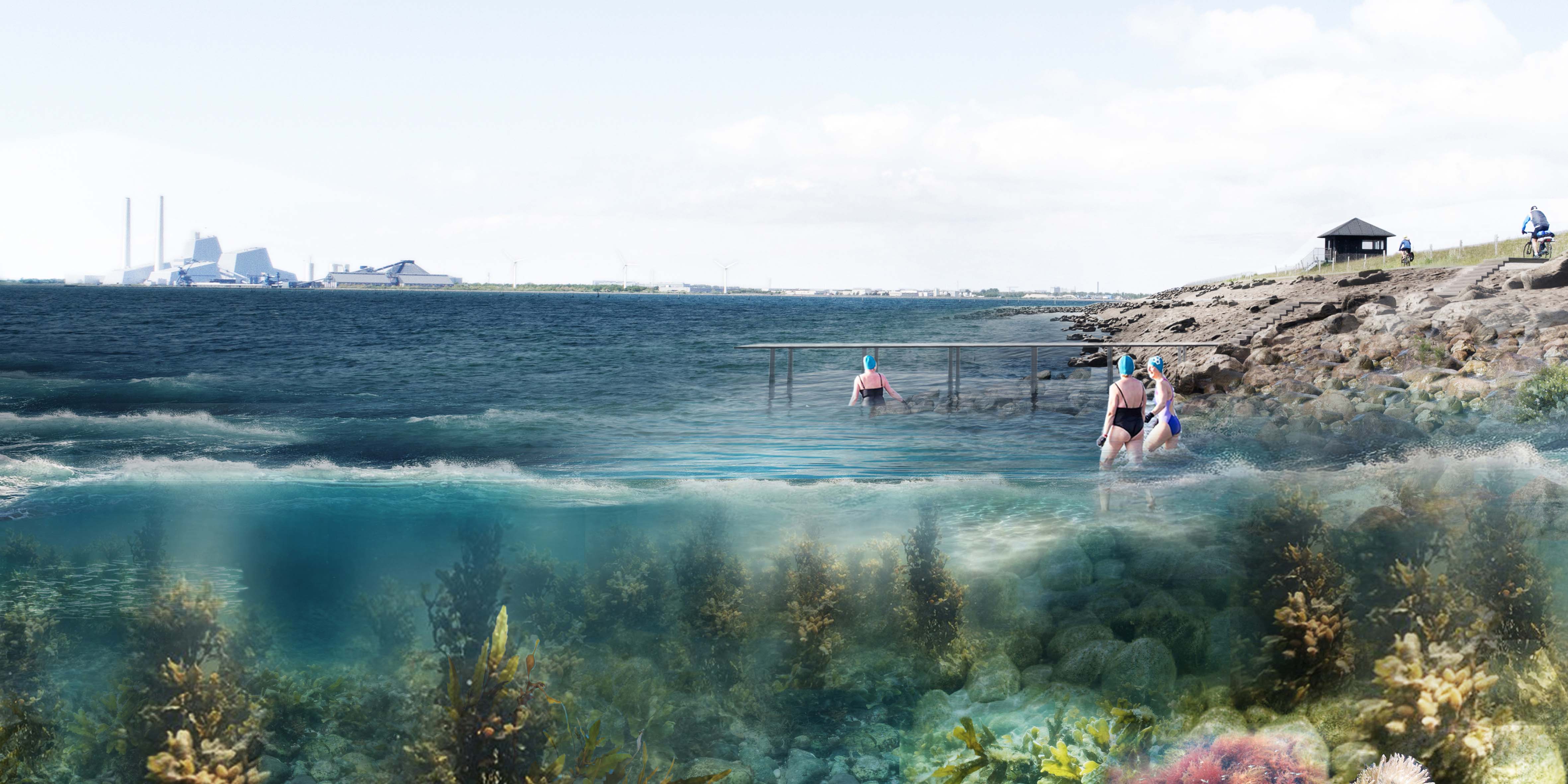
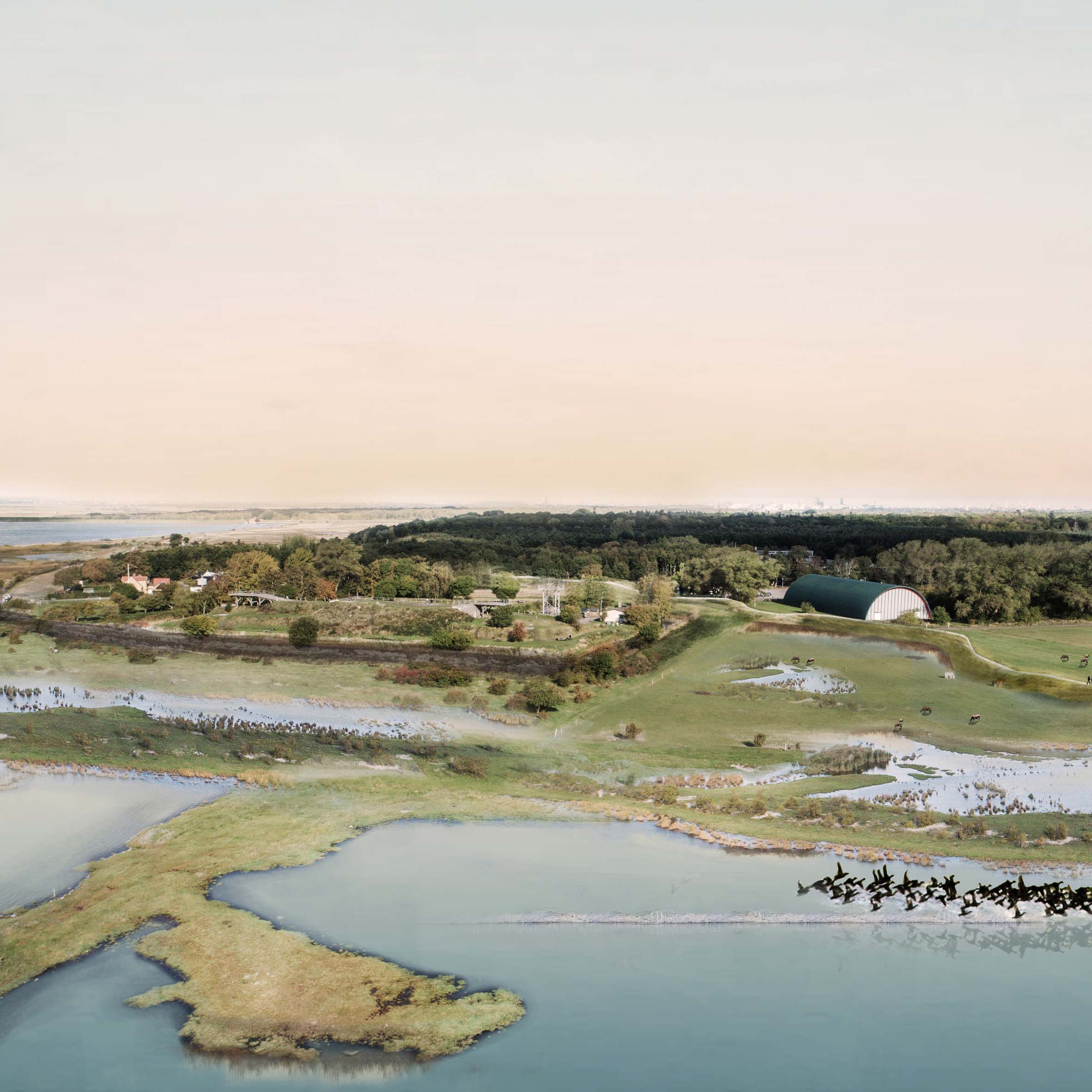
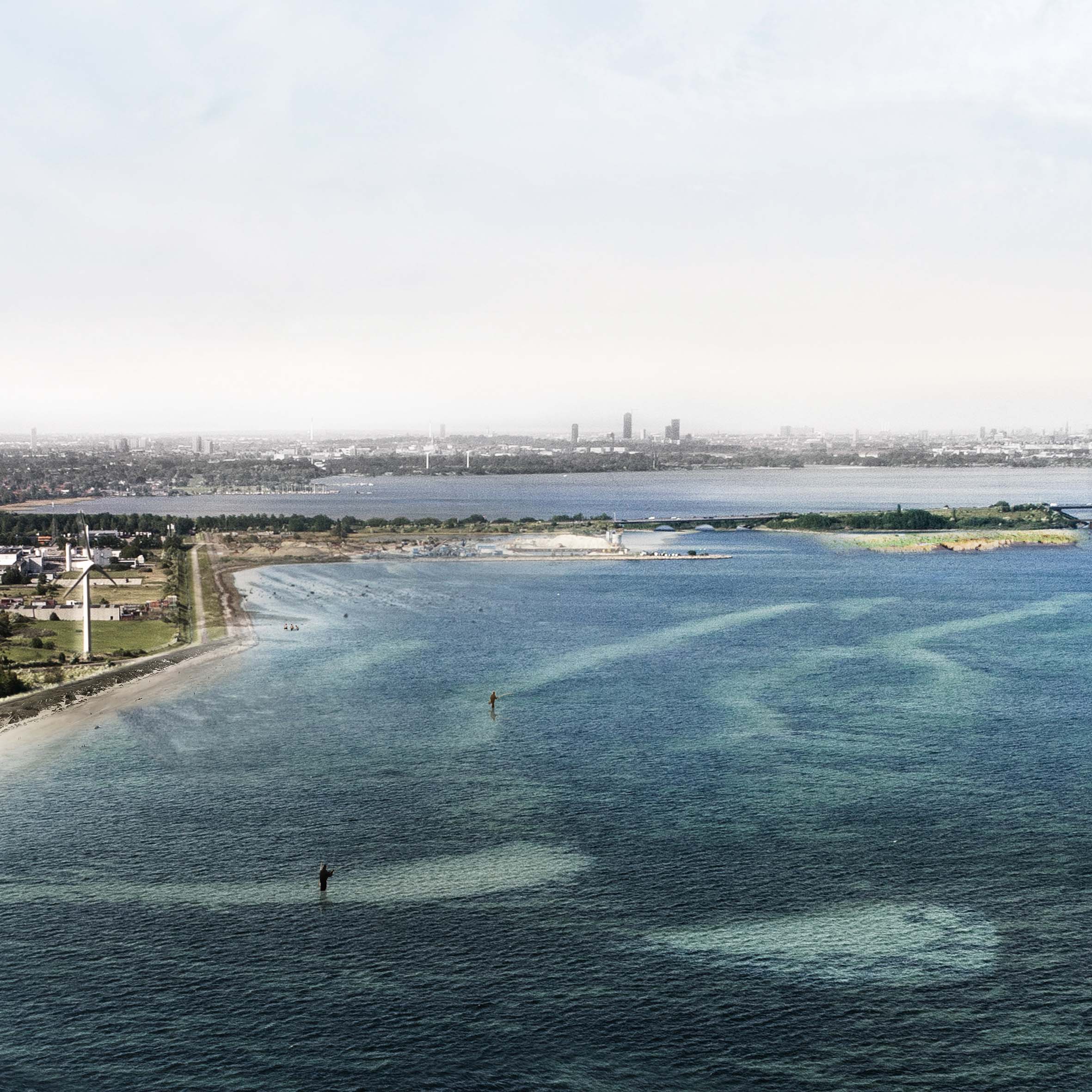
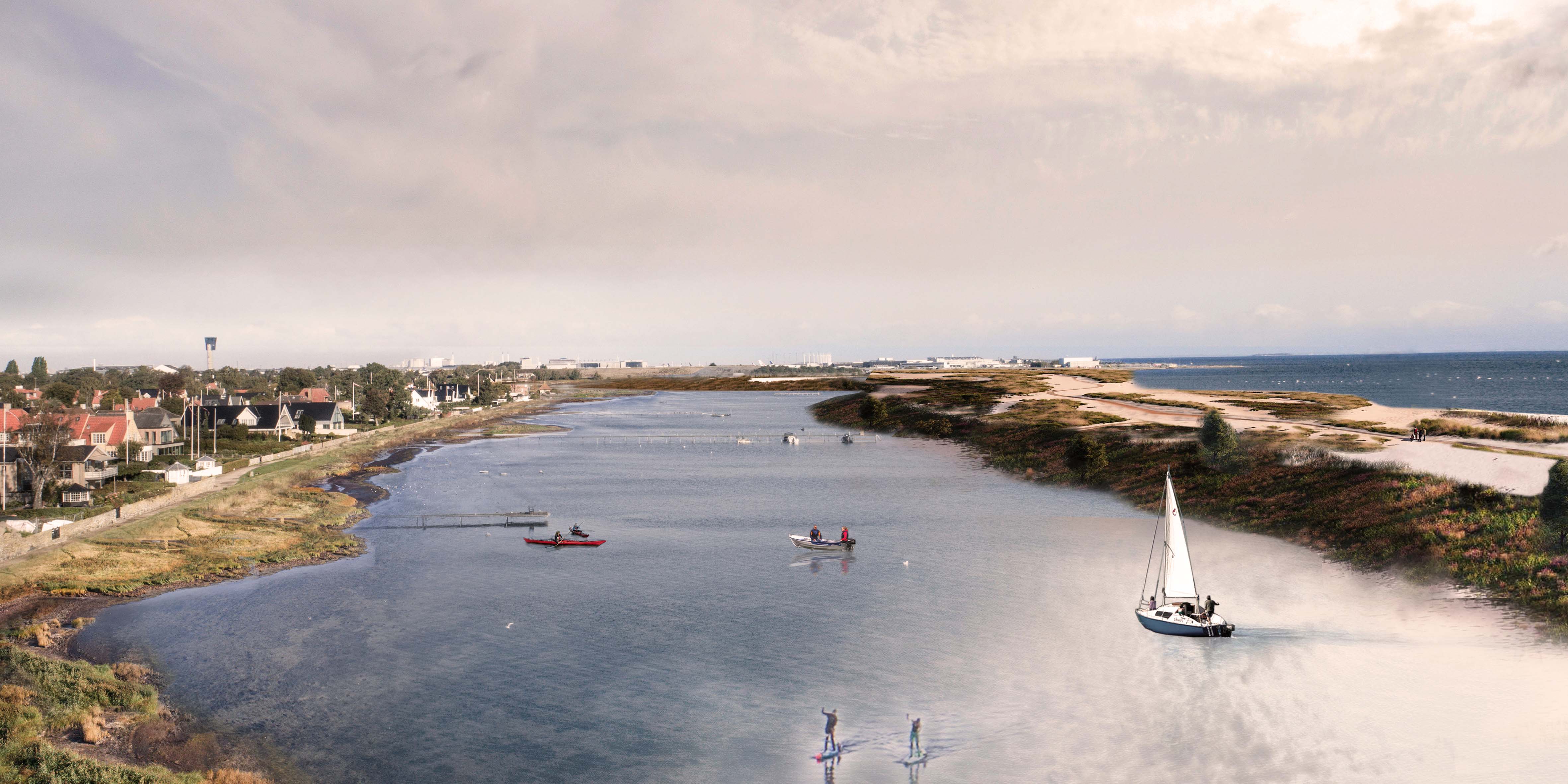
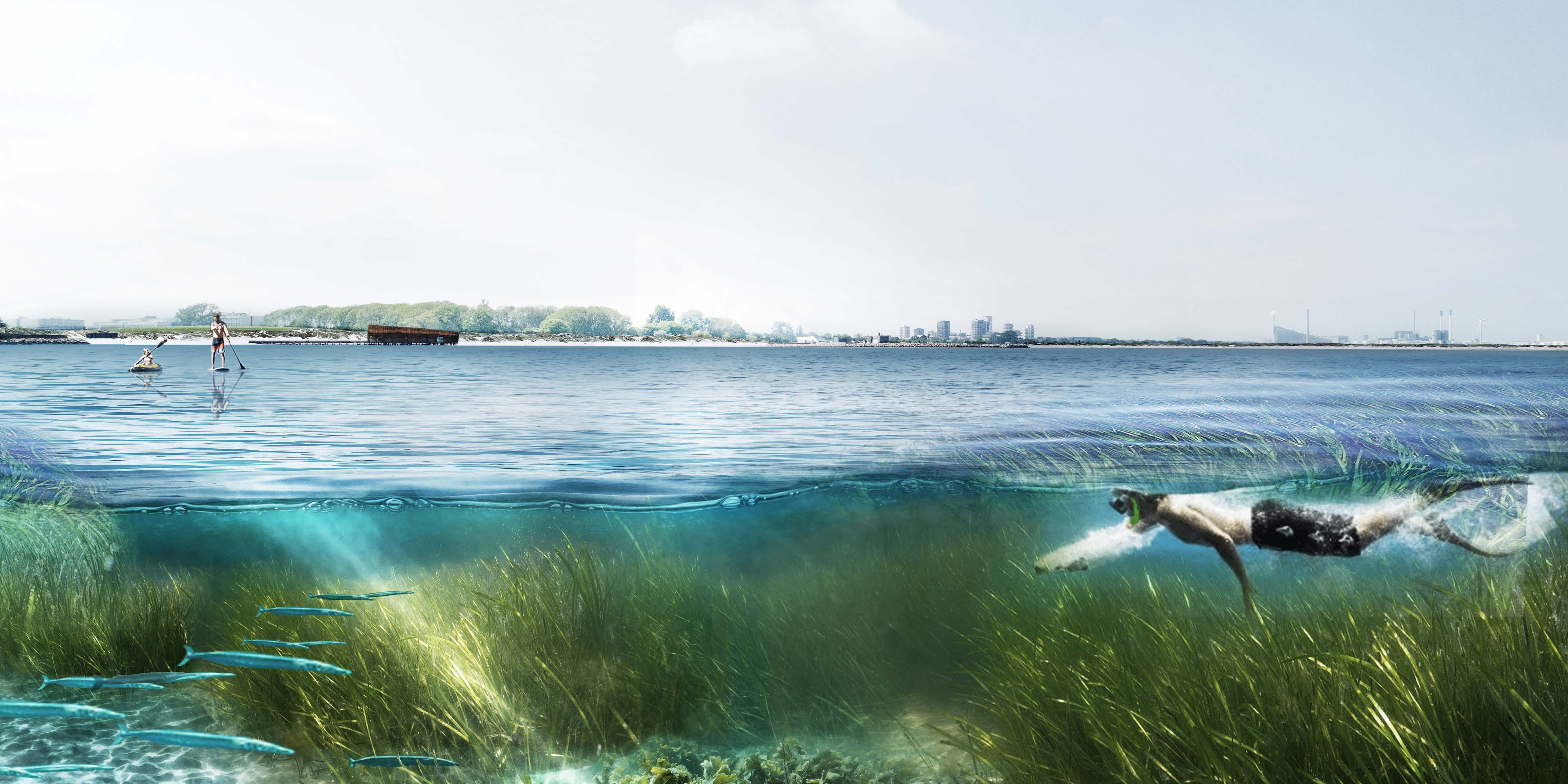
The Living Coast is a vision proposal for nature-based storm surge protection and coastal development in the southern part of Greater Copenhagen.
The work builds on extensive analysis carried out by the four municipalities. The preparatory process leading up to the final vision included a site visit and two workshops involving representatives from the municipalities and specialist experts.
The vision proposal presents a broad range of examples illustrating the values associated with nature-based solutions. The aim has been to support existing spatial and recreational qualities along the coast, to give residents of Greater Copenhagen new and easier access to natural areas, and to integrate climate adaptation with measures that strengthen the relationship between land and water. The coastline already offers numerous recreational facilities and paths, which can be connected as part of the storm surge protection system.
The nature-based storm surge protection combines a range of measures through an adaptive approach to climate resilience, addressing both areas that are currently unprotected and areas where existing dikes need to be modified. In addition, the nature-based solution supports the further development of the area’s natural habitats.